The Broken Feedback Loop: How to Save Time and Make Marking Matter
Effective feedback is a cornerstone of learning, yet one of the most persistent challenges in education is the "feedback gap"—the disconnect between the hours teachers spend marking and the impact that feedback actually has on student progress. When feedback is delayed or inconsistent, it often goes unread and unheeded, a sign of a broken feedback loop. Decades of educational research show that for feedback to be effective, it must be timely, consistent, and actionable. The challenge is not a lack of teacher effort, but the systemic limitations of manual assessment.
The Timeliness Principle: Why Speed is Crucial
The work of educational researcher John Hattie, outlined in his landmark "Visible Learning" study, provides clear evidence that the impact of feedback diminishes rapidly over time.
- The Research: When students receive feedback weeks after submitting an assignment, the context is lost. The advice is no longer relevant to what they are learning now, and the opportunity for immediate improvement vanishes. You can learn more from Hattie's research summary.
- The Technological Potential: This is where AI-powered tools present a significant opportunity. By automating the initial, time-consuming aspects of marking, the feedback cycle can be shrunk from weeks to days. This allows teachers to return work while the material is still fresh in a student's mind, dramatically increasing its impact, in line with established research.
The Consistency Imperative: Ensuring Fairness for All
Fairness is the bedrock of trustworthy assessment. However, maintaining perfect consistency when marking the 30th essay at 10 PM is a task fraught with challenges related to cognitive load and unconscious bias. This is a core concept from foundational papers.
- The Challenge: Even with a clear rubric, fatigue can lead to inconsistent application of standards across a full class set, which can be deeply demotivating for students.
- The Technological Potential: An AI's greatest strength is its ability to apply a complex rubric with perfect fidelity to every single submission. This provides a completely consistent and unbiased baseline for assessment, ensuring a level playing field and freeing the teacher to focus their expert judgment on the more nuanced aspects of student work.
From Generic Comments to Actionable Guidance
For feedback to drive improvement, it must be specific and clear about the next steps. The Education Endowment Foundation (EEF), a leading UK authority, emphasizes that effective feedback must be actionable.
- The Challenge: Under time pressure, it is easy to fall back on generic, non-specific comments ("Good work," "Needs more detail") that do little to guide the learner.
- The Technological Potential: Intelligent systems can be programmed to generate specific, rubric-based comments for every student. This allows for the delivery of targeted feedback that highlights specific strengths and pinpoints exact areas for improvement, providing the actionable guidance that research shows is essential for progress.
Conclusion
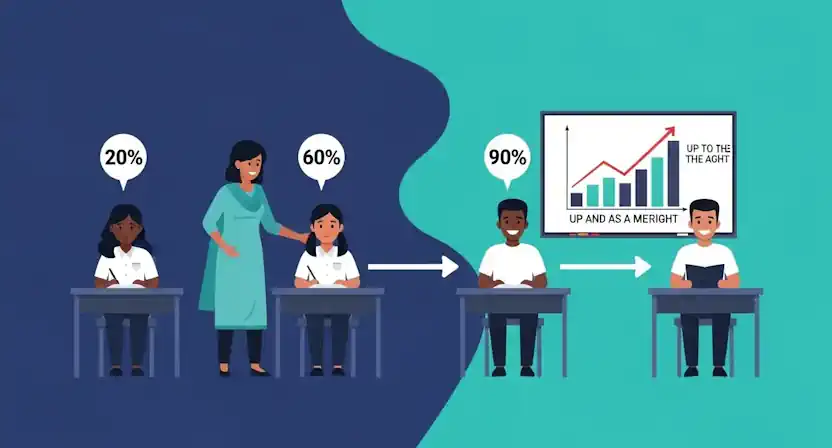
The potential of intelligent tools in education lies not in replacing the teacher, but in amplifying their professional judgment by solving the systemic challenges of manual assessment. By addressing the evidence-based principles of timeliness, consistency, and actionable guidance, technology can help fix the broken feedback loop. This ensures the hard work of assessment translates into meaningful student achievement, freeing educators to focus on the next, most human step: using those powerful insights to plan the next great lesson.
← Back to Blog